Tasting Menu
Hungarikum Tasting Menu
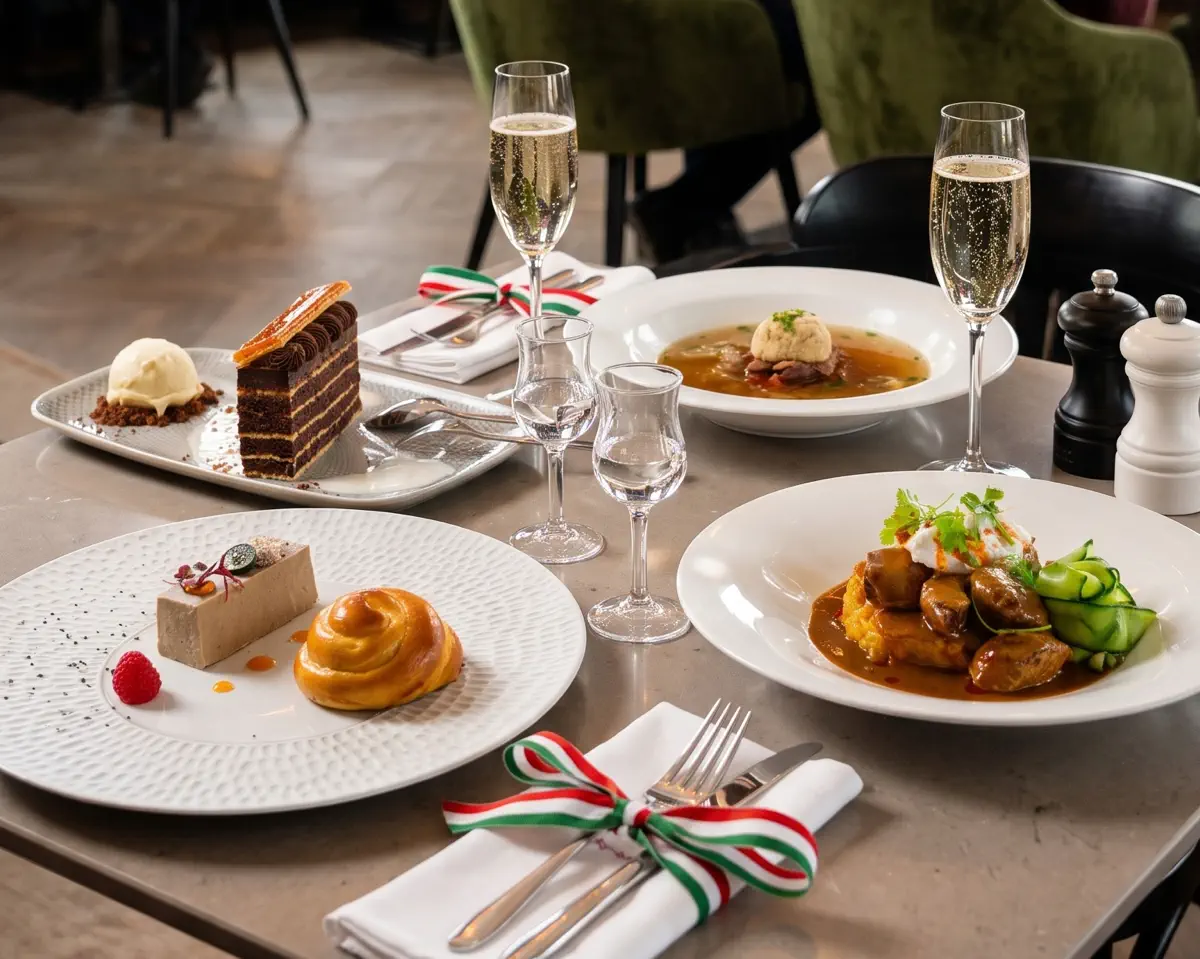
The finest traditions of Hungarian cuisine in a single menu. Our five-course Hungarikum tasting menu is available all day long with a panoramic view of Buda Castle: following the introductory “Négyes fogat” welcome drink, the menu features a golden bite of duck liver pâté, a rich roasted duck soup, veal paprikash served with egg-drop noodles, and the classic Dobos cake, creating a well-rounded culinary journey. The price of the meal is 18,000 HUF, and for an additional 7,200 HUF, you can choose a wine pairing featuring Egri Bikavér and Zwack Unicum Riserva.
The menu bar
Five courses, one occasion
Price
Allergen Chart
Hungarian Specialties
Let us guide you through the world of Hungarikums! “Hungarikum” is a collective term denoting the pinnacle of Hungarian achievement, referring to values worthy of special recognition that embody the uniqueness, distinctiveness, and quality characteristic of Hungarian culture.
Szeged Paprika
The cultivation of Szeged paprika began in the 18th century. The area around Szeged features excellent soil and favorable climatic conditions, making it ideal for paprika cultivation. A tradition has developed in Szeged of grinding the paprika using a unique milling technique.
Csaba Sausage
The production of Csaba sausage is based on recipes dating back many years and unique preparation methods. The sausage is traditionally made from pork and bacon. The sausage-making process includes special seasoning and natural smoking, which result in its characteristic flavor and aroma.
Erős Pista
Erős Pista is made from the highest-quality, hand-picked paprika peppers that have ripened to a deep red. Erős Pista seasonings are distinguished from similar products made in other paprika-producing countries by their unique color and flavor.
Szentesi Paprika
The main characteristics and qualities that make “Szentesi Paprika” a delight to eat are its exceptionally rich, spicy, sweet, and hot flavor; its intense paprika aroma, reminiscent of ground paprika; and its thin skin. The flesh thickness of the peppers is 3–7 mm, which allows for the delightful release of flavors and aromas, even when consumed primarily fresh.
Dobos Cake
The Dobos Cake consists of distinctive layers filled with a special buttercream. The cake owes its unique appearance and flavor to the caramel layer covering the top and the chocolate coating. The cake’s decoration and the special “mirroring” technique used for the caramel layer also contribute to the Dobos Cake’s uniqueness.
Egri Bikavér
There is a famous story associated with the name of this wine: during the siege of Eger Castle, Hungarian soldiers bravely drank red wine, and the Turks, seeing this, believed they were fortifying themselves with bull’s blood. Wineries generally use the more traditional Kékfrankos, Kadarka, and other local grape varieties in the blend.
Tokaj Wine Region
The Tokaj Wine Region, as the sole and eponymous wine region within the Tokaj wine area, boasts unique natural, historical, and human resources. Among its wine specialties, it is important to highlight máslás, fordítás, szamorodni (in both dry and sweet varieties), aszú, and essencia.
Zwack Unicum
The liqueur was originally made from a blend of herbs and spices, and the original recipe has been used ever since. More than 40 different herbs and spices are used to make the liqueur.
Pálinka must be fermented, distilled, aged, rested, and bottled in Hungary. Pálinka may not be flavored, colored, or sweetened, not even to round out the final taste of the product. The story of “aqua vitae,” associated with Queen Elizabeth, dates back to the 14th century, and “burned spirits” were considered a medicine until the 16th century.
Törley Sparkling Wine
On August 1, 1882, József Törley registered his business under the name “József Törley and Company” with the Budapest Commercial Registry. The history of Törley sparkling wines thus dates back nearly a century and a half. Törley sparkling wines also enhance the reputation of Hungarian products in many countries around the world.
Hungarian Acacia Honey
The vast acacia groves thriving in the unique climate of the Carpathian Basin are what make Hungarian acacia honey so special. Hungarian acacia honey is light in color, mild, less acidic, and has the scent of acacia blossoms. Its color ranges from nearly colorless to slightly yellowish. Due to its high sugar content, it does not crystallize and remains liquid for years.
(Chamomile) Chamomile is characterized as a plant with antispasmodic and cholagogue properties. It grows wild throughout Hungary; significant populations are found in the saline areas of the Great Plain, and it is found in large numbers on the saline, waterlogged soils of the Tisza region, in the so-called “szikfoltok.”